Guides · By Alexis & Evangelina · 7 min read · July 5, 2026
Gold-Filled vs. Sterling Silver: We Weld Both — Here's Which Lasts Longer
"Should I do silver or gold?" is the question we hear most at the welding table — usually right after "does it hurt?" Both metals we use are the real thing (never plated), so you genuinely can't go wrong. But they wear, age, and price differently, and the right pick depends on your skin, your routine, and the look you're after. Here's the honest breakdown from people who weld both onto wrists every weekend in Miami.
First, the good news: both are solid, water-safe metals
Permanent jewelry only works if the metal can live on your body 24/7 — showers, ocean, sweat, sleep. That rules out cheap plated chains, which flake and can turn skin green. Bond & Fifth welds only two metals: sterling silver and 14k gold-filled. Neither is plated. Both are genuinely water-safe and tarnish-resistant, which is exactly why they hold up to Miami humidity and saltwater.
What is 14k gold-filled — and why it's not gold plating
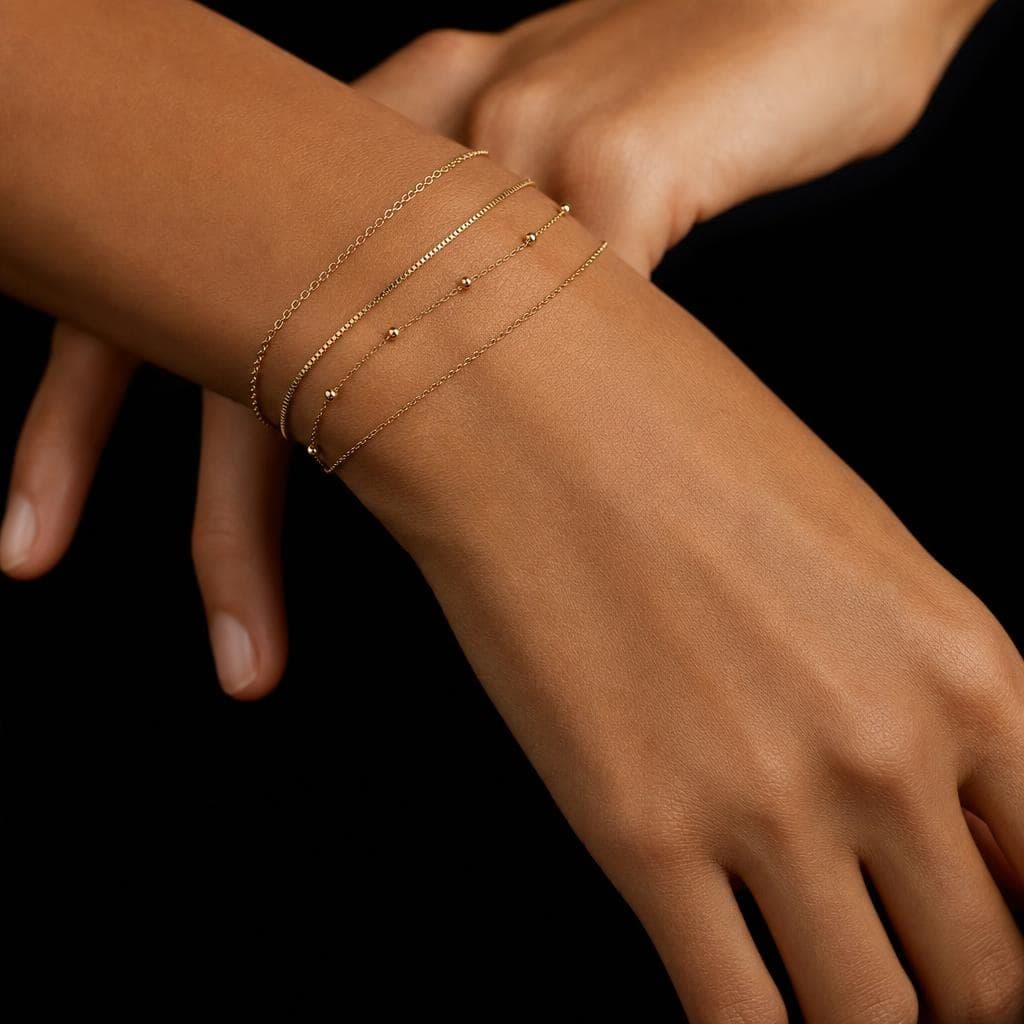
Gold-filled is the most misunderstood term in jewelry. It is not plating. By US standard, gold-filled must contain at least 5% pure gold by weight, with a thick layer of real 14k gold pressure-bonded over a jeweler's brass core. That layer is dramatically thicker than typical gold plating — which is why gold-filled keeps its color for years of daily wear instead of rubbing off in months. For a piece you never take off, that thickness is the whole ballgame.
What is sterling silver?
Sterling silver is 92.5% pure silver — the other 7.5% is usually copper, which adds strength, since pure silver is too soft to wear daily. It's bright, cool-toned, and friendly to most skin. Over time it can develop a soft patina, but here's what most people don't realize: daily wear actually keeps sterling bright. The gentle friction of living in it polishes it as you go, so a permanent chain rarely tarnishes the way a silver piece forgotten in a drawer would.
Head to head
Both are excellent. Here's how they actually compare for permanent jewelry:
- Color: gold-filled reads warm and classic; sterling reads cool, modern, and bright. Pick whichever suits your skin tone and the rest of your jewelry.
- Durability: both last for years of 24/7 wear. Gold-filled holds its color slightly longer with zero effort; sterling may want an occasional polishing cloth if you like it extra shiny.
- Price: sterling is the more affordable entry point; gold-filled costs a bit more because of the real gold content.
- Skin sensitivity: both are friendly to most skin. If you react to inexpensive jewelry, it's usually the nickel in plated pieces — neither of ours is a plated nickel chain.
- Upkeep: essentially none for either. Rinse off sunscreen and lotion buildup now and then; that's it.
Why we don't push solid gold for permanent jewelry
Plenty of people ask for solid 14k gold, and we understand the instinct — but for something welded on 24/7, we usually talk them out of it, for three honest reasons. First, cost: solid gold can run several times the price of gold-filled for a look most people can't tell apart on the wrist. Second, you can't baby a permanent chain — it gets slept in, worked out in, and snagged on car doors, and risking a solid-gold chain for that is a lot. Third, dainty solid-gold chains are actually softer and can kink or stretch more easily than a well-made gold-filled chain. Gold-filled gives you the real-gold look and feel, water-safe and worry-free, at a price that makes sense for a piece you'll live in.
So which should you get?
- Choose sterling silver if you love a bright, cool tone, want the most affordable option, or mostly wear silver-toned jewelry.
- Choose 14k gold-filled if you want warm gold that keeps its color with zero upkeep, or you're gifting a piece meant to last for years.
- Can't decide? Mix them. A silver and a gold-filled chain stacked together is one of our most-requested looks — the two-tone stack goes with everything.
Does gold-filled wear off?+
Not the way plating does. Gold-filled has a thick, bonded layer of real 14k gold — at least 5% of the piece's weight — so it holds its color for years of daily wear. Plated jewelry has a microscopic gold layer that rubs off in months. That difference is exactly why we weld gold-filled and never plated.
Which lasts longer, silver or gold-filled?+
Both last for years of 24/7 wear. Gold-filled keeps its color with essentially no effort; sterling silver is just as durable but may want an occasional swipe with a polishing cloth if you like it at its brightest. Neither will let you down in Miami's humidity or saltwater.
Will silver or gold-filled irritate sensitive skin?+
Rarely. Most jewelry reactions come from nickel in cheap plated pieces. Sterling silver is 92.5% silver (usually alloyed with copper, not nickel), and gold-filled has a real 14k gold surface — both are friendly to most sensitive skin. If you have a known metal allergy, tell us at the table and we'll help you choose.
Can I get a bracelet in silver and an anklet in gold?+
Absolutely — mixing metals across pieces is common and looks great. Plenty of people pair a silver bracelet stack with a gold-filled anklet, or the reverse. There's no rule.
Is gold-filled worth the extra cost over silver?+
If you want warm-gold color with zero upkeep and a piece that reads like fine gold jewelry, yes. If you prefer a cool, bright tone or the lowest price, sterling silver is a genuinely great choice — not a downgrade. Both are metals we're happy to weld onto someone for years.
Sources & further reading
Still deciding? The easiest way is to hold both against your skin at a pop-up. Come find us, or book a private session and we'll bring the whole chain bar to you.
Keep exploring